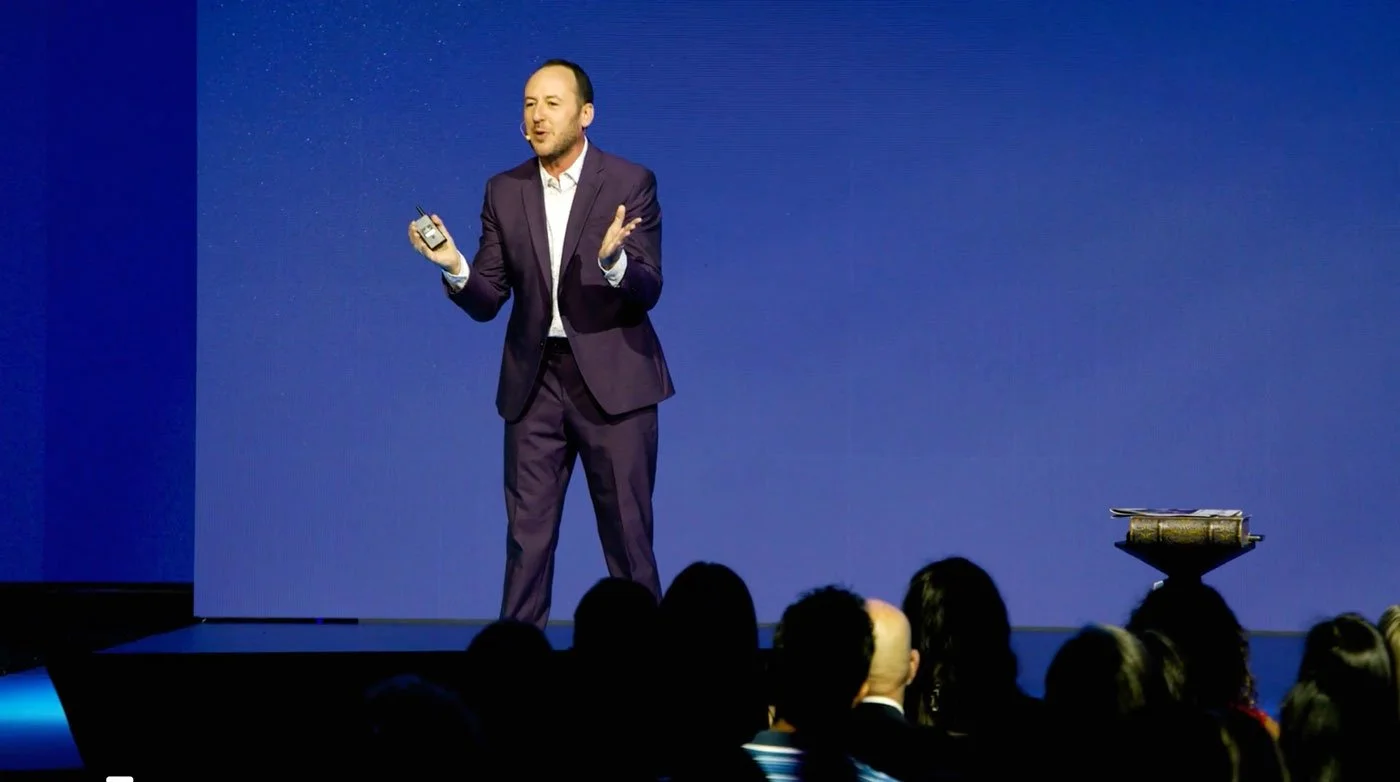
In my keynote, The AI Effect, I show why the secret to AI adoption is leading with outcomes, not tools.
Most people have had a magic moment with AI. Just not at work.
At home, people use AI to plan vacations, draft messages, research purchases. They experiment freely. They find it genuinely useful.
At work, the same tools feel like a chore. Mandatory trainings. Assigned platforms. Compliance modules. The technology is identical, but the experience is completely different.
The difference is where attention goes. At home, people start with what they want to accomplish. The tool is just how they get there. At work, the tool comes first. Use this platform. Complete this training. Log your usage.
When the tool is the focus, adoption stalls. When the outcome is the focus, adoption happens naturally.
Magicians think in methods and effects.
The method is how a trick works. The preparation, the technique, the mechanics. The effect is what the audience experiences. The moment. The impossibility. The feeling they walk away with.
Audiences never care about the method. They care about the effect. A magician who talks about technique while performing would kill the magic. The method has to stay invisible for the effect to land.
AI works the same way. When companies lead with the tool, they’re asking people to care about method. When they lead with outcomes, people find their own reasons to adopt.
The companies seeing real AI traction aren’t mandating platforms. They’re asking better questions: What do you want to accomplish? Where do you need support? What would make your work easier? Then they let AI become the invisible method behind the effect.
Try this with your team.
Instead of introducing a tool, ask: “What’s an outcome you want that feels harder than it should be?”
Let them name the effect first. Then explore whether AI could be the method. Adoption starts when people own the outcome, not the tool.
My AI adoption keynote, The AI Effect, uses this framework.
It helps teams stop fixating on technology and start focusing on what they actually want to accomplish. If that sounds useful for an upcoming meeting or event, reach out. We’d be happy to talk through how it might fit.