Why a Construction Worker Put His Phone Down
Here’s why my keynote held a room of pool builders and executives equally engaged for nearly two hours. The answer surprised me.
A construction worker came up to me after my keynote and said this was the first meeting where he hadn’t looked at his phone once.
That got me thinking about why. The room was split between people who physically build pools and people who sell the vision of a beautiful backyard. Two completely different jobs, two different ways of seeing the world. So what keeps both groups equally engaged for the same session?
I think the answer is simpler than most people expect. When your content is about people, about how we read each other, how we build trust, how we communicate under pressure, the job title stops mattering. A foreman and a sales director both deal with difficult conversations, misread signals, and moments where trust is on the line. Magic is what gets everyone’s guard down long enough to actually hear the material.
I’ve spent 25 years performing magic and speaking to corporate audiences. I’ve been in rooms full of software engineers, attorneys, financial advisors, and healthcare executives. Each audience has its own culture, its own language, its own way of sizing you up in the first 30 seconds. But the thing I keep coming back to is that the principles underneath all of my content are the same no matter who’s sitting in the chairs. How do you read someone quickly? How do you adjust your communication when you realize you’re talking to a different personality type? How do you earn trust when the person across from you is skeptical?
Those questions matter to everyone. They matter to the guy laying tile at 6 AM and they matter to the VP reviewing quarterly projections. The delivery changes, the examples shift, but the core of it stays the same because these are fundamentally human skills.
The Room That Proved It
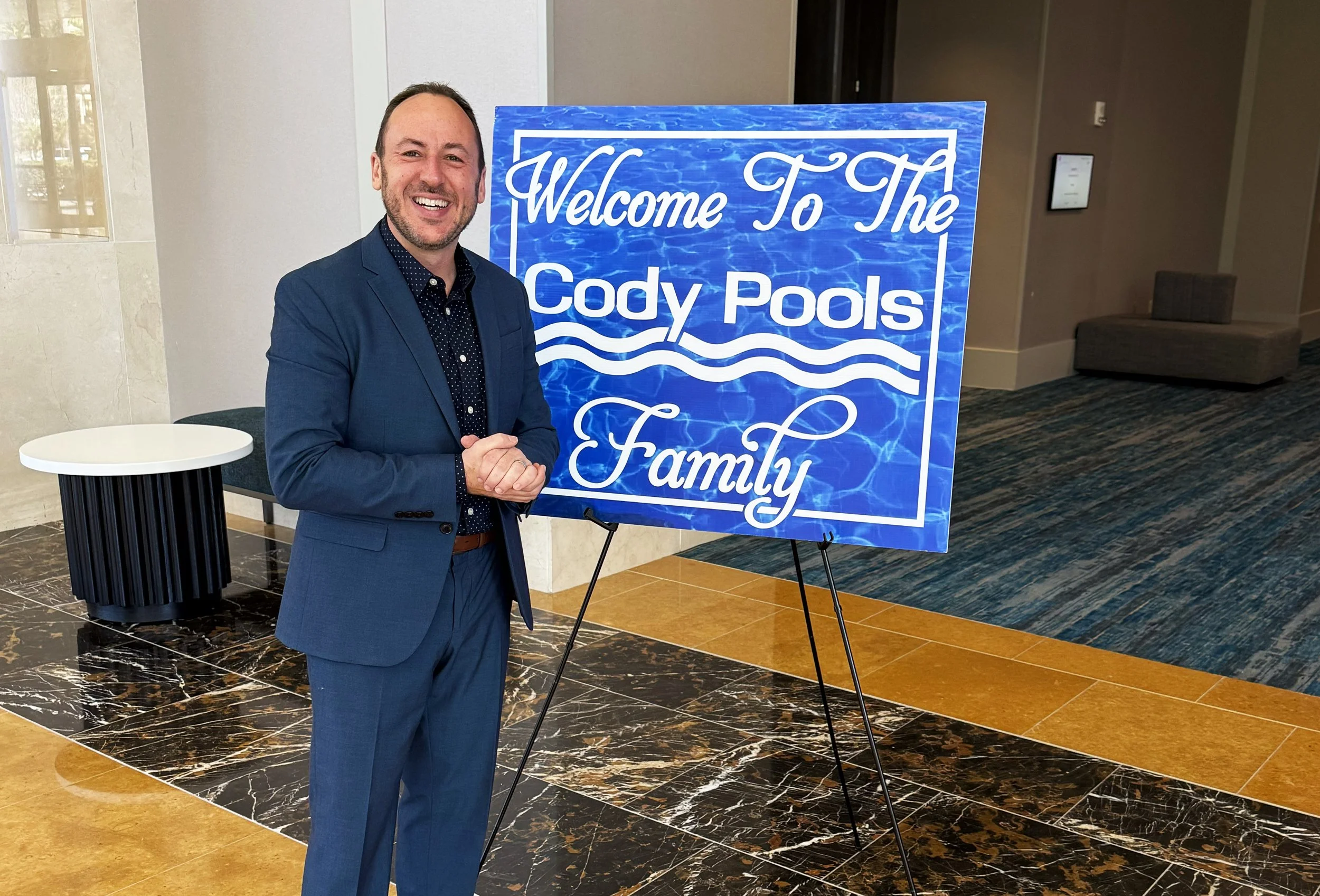
Last week I delivered my Personality Magic™ presentation to the American Pools and Spas 2026 Conference at the Orlando World Center Marriott. American Pools and Spas is part of the Cody Pools family of companies, and the audience was a true mix of field crews and leadership.
The energy was incredible. People were reacting, laughing, calling things out, genuinely participating. That kind of engagement happens when content makes people feel like you're talking about their actual life.
When I do magic in a keynote, it serves a very specific purpose. It disarms the room. People walk into a conference session with their guard up. They’ve sat through presentations before. They know what to expect. Magic breaks that pattern immediately. Once someone sees something they can’t explain, their brain shifts from passive to active. They’re paying attention now because they want to figure out what just happened. And while they’re in that state, the teaching lands differently. It sticks.
The pool builders in that room weren’t expecting to care about a keynote on communication and personality types. Some of them probably walked in thinking this was going to be another corporate training exercise they had to endure. But magic doesn’t care about your expectations. It grabs you. And once you’re grabbed, the content has a chance to reach you.
Why “Content About People” Is the Universal Key
A lot of event planners worry that their audience is too diverse for a single keynote to connect across the board. I hear this all the time. “Our sales team will love it, but will our operations people get anything out of it?” Or the reverse: “Our technical folks will tune out if it feels too soft.”
I understand the concern, but I think it’s based on a flawed assumption. The assumption is that engagement depends on the content matching someone’s job function. That a sales keynote works for salespeople and a leadership keynote works for leaders. But the most engaging content I’ve ever delivered, and the sessions where I get feedback like the construction worker’s comment, are always rooted in something more fundamental than job function.
They’re rooted in people.
Every person in every role deals with other people. They negotiate, they persuade, they listen (or fail to listen), they try to build rapport, they try to read the room. A construction foreman managing a crew of ten has to read personality types just as much as a regional sales manager running a team call. The stakes are different. The context is different. But the skill is identical.
That’s what I teach. I use magic as the vehicle and personality as the framework, and I watch it land in rooms that have no business agreeing with each other. Blue-collar and white-collar, introverts and extroverts, skeptics and enthusiasts. When you make your content about how people actually think and behave, you remove the barrier of “this isn’t for me.”
What I Took Away
I’ve done hundreds of keynotes. The ones that stay with me are the ones where someone who didn’t expect to be moved tells me they were. The construction worker who put his phone down for more than an hour did that because the content spoke to something real in his work and his relationships. That’s the standard I hold myself to, and events like this one remind me why this work matters.
If you’re planning a conference and wondering whether your audience is “right” for a keynote on communication and personality, I’d encourage you to rethink the question. The better question is: does your team interact with other human beings? If the answer is yes, the content will land.